


Getting hurt badly enough that you can't show up to work isn't just a medical problem. It's a financial one. The bills don't pause because you're out of commission. The rent still comes due. And if you think your employer or the insurance company will just take care of it without a fight, you're setting yourself up for disappointment. We've seen too many workers in Houston assume everything will work itself out—then wake up three weeks later wondering why their claim was denied or their paycheck stopped coming.
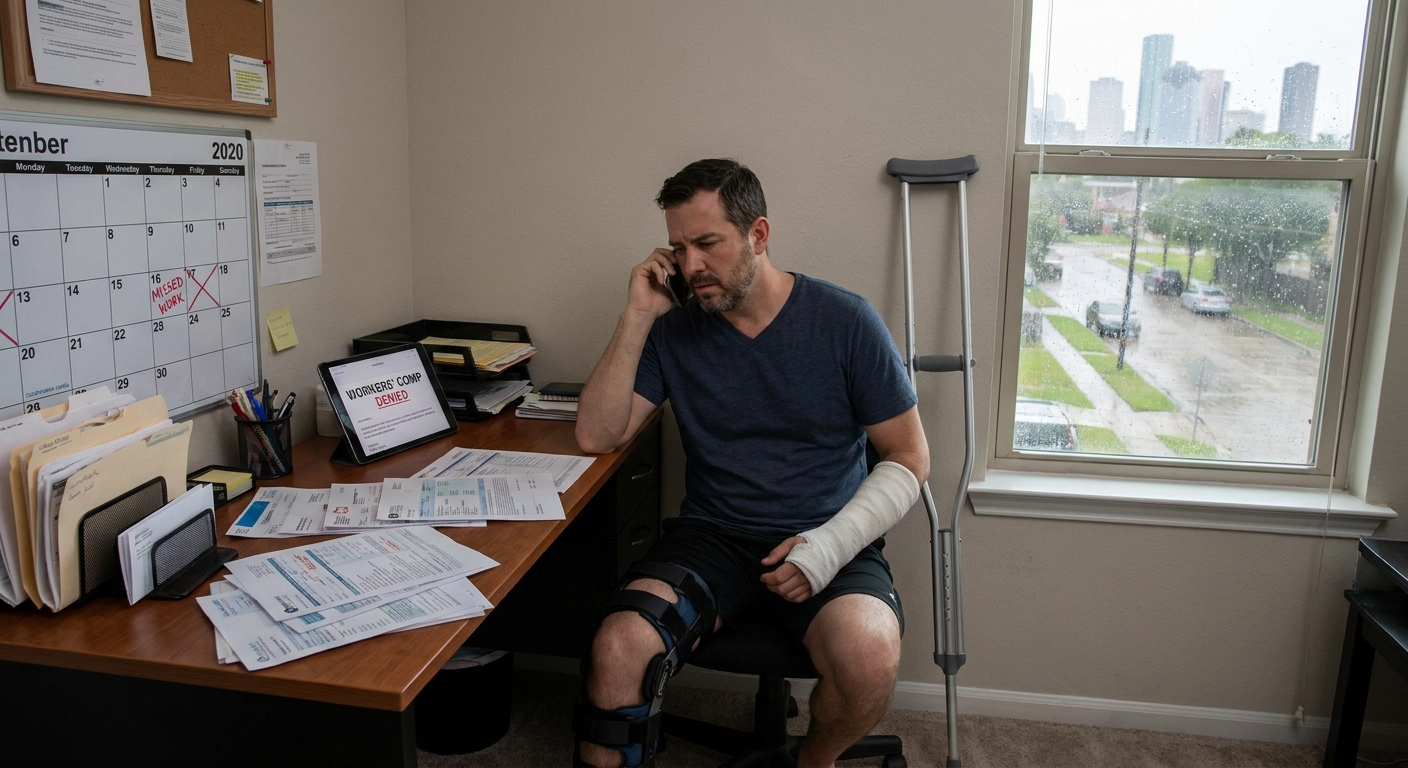
Here's what really matters. You need to move fast, document everything, and understand which path you're actually on—because in Texas, not all injuries are treated the same. Miss a deadline or skip a step, and you could be left holding the bag on thousands of dollars in lost wages and medical costs.
Get Medical Attention and Create a Record
Your first move isn't optional. Get to a doctor. Not tomorrow. Not when it feels worse. Now. Your health is obviously priority one, but there's a second reason that matters just as much—documentation. If you wait a week to see someone, the insurance company will use that gap against you. They'll argue the injury wasn't serious or that something else caused it. Don't give them ammunition.
That medical record becomes your proof. It ties your injury to a specific date and event. Without it, you're asking someone to take your word for it. And in our experience, that rarely ends well. Keep copies of everything—intake forms, diagnostic tests, treatment notes, prescriptions. All of it.
Report It to Your Employer Immediately
Texas gives you 30 days to report a workplace injury, but waiting that long is a mistake. Tell your employer the same day it happens, or as close to it as possible. Verbal notice counts, but written notice is better. Send an email. Fill out an incident report. Get something on the record that shows you flagged it right away.
Why the urgency? Because delays create doubt. Employers and insurers love to point at late reporting and claim the injury must not have been that bad—or that it didn't happen at work at all. We've seen claims get tangled up over timing issues that could've been avoided with a single email sent the day of the incident.
Workers' Comp Isn't Guaranteed in Texas
Here's where Texas gets tricky. Most states require employers to carry workers' compensation insurance. Texas doesn't. That means your employer might have coverage—or they might not. If they do, you're usually covered for medical bills and a portion of lost wages while you recover. If they don't, you're looking at a completely different process.
When workers' comp does apply, benefits typically include:
- Full coverage of medical treatment related to your injury
- Temporary income benefits to replace part of your paycheck
- Impairment income benefits if you have lasting damage
- Supplemental income benefits in specific situations
- Vocational rehab if you can't return to your old job
You'll file through the Texas Department of Insurance, Division of Workers' Compensation. Miss their deadlines, and you could lose your shot at benefits. This isn't the kind of paperwork you want to wing.
When Your Employer Has No Coverage
If your employer opted out of workers' comp, you're not out of options—but the road gets harder. You can sue your employer directly if their negligence caused your injury. That means proving they failed to provide a safe work environment or ignored known hazards. It's a higher bar than a standard workers' comp claim, and you'll need evidence to back it up.
The upside? If you win, you can recover more than workers' comp would've paid. Pain and suffering, full lost wages, punitive damages—all of that's on the table. The downside? It takes longer, costs more upfront, and there's no guarantee. This is the kind of case where going solo is a bad idea. You'll want someone who knows how to build a negligence case and won't settle for less than you're owed.
Injuries Outside of Work Still Count
Not every injury that kills your income happens on the clock. Car wrecks, slip and falls, dog bites—plenty of people get hurt off the job and still can't work. In those situations, you're looking at a personal injury claim against whoever caused the damage. That could be another driver, a property owner, or a business that didn't maintain safe conditions.
If you've got disability insurance—through your employer or a private policy—now's the time to use it. Short-term and long-term disability benefits can replace part of your paycheck while you're out. Just know that insurers will scrutinize your claim. They'll want proof you can't work, and they'll look for any reason to deny or delay payment. Stay on top of the paperwork and don't assume approval is automatic.
Job Protection Under FMLA
Worried about losing your job while you're recovering? The Family and Medical Leave Act might cover you—if you qualify. FMLA gives eligible employees up to 12 weeks of unpaid leave per year for serious health conditions. Your employer has to hold your position or give you an equivalent one when you return.
Here's what you need to qualify:
- You've worked for your employer for at least 12 months
- You've logged at least 1,250 hours in the past year
- Your employer has 50 or more employees within 75 miles
- Your injury qualifies as a serious health condition
- You provide the required medical certification
FMLA won't pay your bills, but it keeps your job waiting for you. If your employer tries to fire you while you're on protected leave, that's a violation—and you've got legal recourse.

Documentation Wins or Loses Your Case
Whether you're filing for workers' comp, disability, or a personal injury claim, your case is only as strong as your records. We can't stress this enough. Collect everything. Medical reports, pay stubs, correspondence with your employer, insurance forms, photos of the injury or accident scene—it all matters.
Sloppy documentation is one of the fastest ways to lose benefits you're entitled to. Mixing up dates, losing receipts, or failing to follow up on requests from insurers can tank your claim. Treat this like a business transaction, because that's exactly what it is. The other side is looking for gaps, and they will use them.
When to Bring in Legal Help
If your injury is serious, your employer's fighting your claim, or you're dealing with multiple insurance companies, it's time to call in a pro. An experienced attorney helps you cut through the red tape, meet every deadline, and push back when insurers lowball you or deny legitimate claims.
Here's what the right lawyer brings to the table:
- Experience handling Houston-area claims and local procedures
- Knowledge of how much your claim is actually worth
- Ability to negotiate with insurers who don't want to pay
- Resources to investigate and build your case properly
- Willingness to take your case to trial if a fair settlement isn't offered
Most personal injury and workers' comp attorneys work on contingency, meaning you don't pay unless you win. That takes the financial risk off your plate and puts the pressure on them to deliver results.
Protecting Your Future, Not Just Your Paycheck
An injury that keeps you off the job can derail more than your income. It can mess with your career trajectory, your benefits, your ability to support your family. The decisions you make in the first few days and weeks after getting hurt can determine whether you recover financially or spend years trying to dig out.
We've seen workers in Houston lose thousands of dollars—sometimes tens of thousands—because they didn't know their rights or didn't act fast enough. Don't let that be you. Get medical care, report the injury, document everything, and get professional advice if anything feels off. If you need guidance on handling bad faith insurance claims or navigating complex injury cases, reach out to experienced legal professionals who understand Texas law. The system doesn't reward people who wait around hoping things will work out. It rewards the ones who take control early and demand what they're owed.
Let’s Secure Your Recovery Together
Missing work after an injury can feel overwhelming, but you don’t have to face the process alone. We’re here to help you protect your rights, recover your lost wages, and get your life back on track. If you’re ready to talk through your options or need help with your claim, give us a call at 832-519-0054 or schedule an appointment so we can get started on your case together.