


Most injury victims think waiting a few days to see a doctor won't matter. It will. Insurance adjusters watch every move you make after an accident — and when you skip the ER or put off that first appointment, they take notes. Your injuries might be real, your pain might be legitimate, but if the paper trail doesn't back it up, you're fighting an uphill battle. In Houston, where personal injury claims move fast and insurers move faster, timing isn't just about your health. It's about your case.
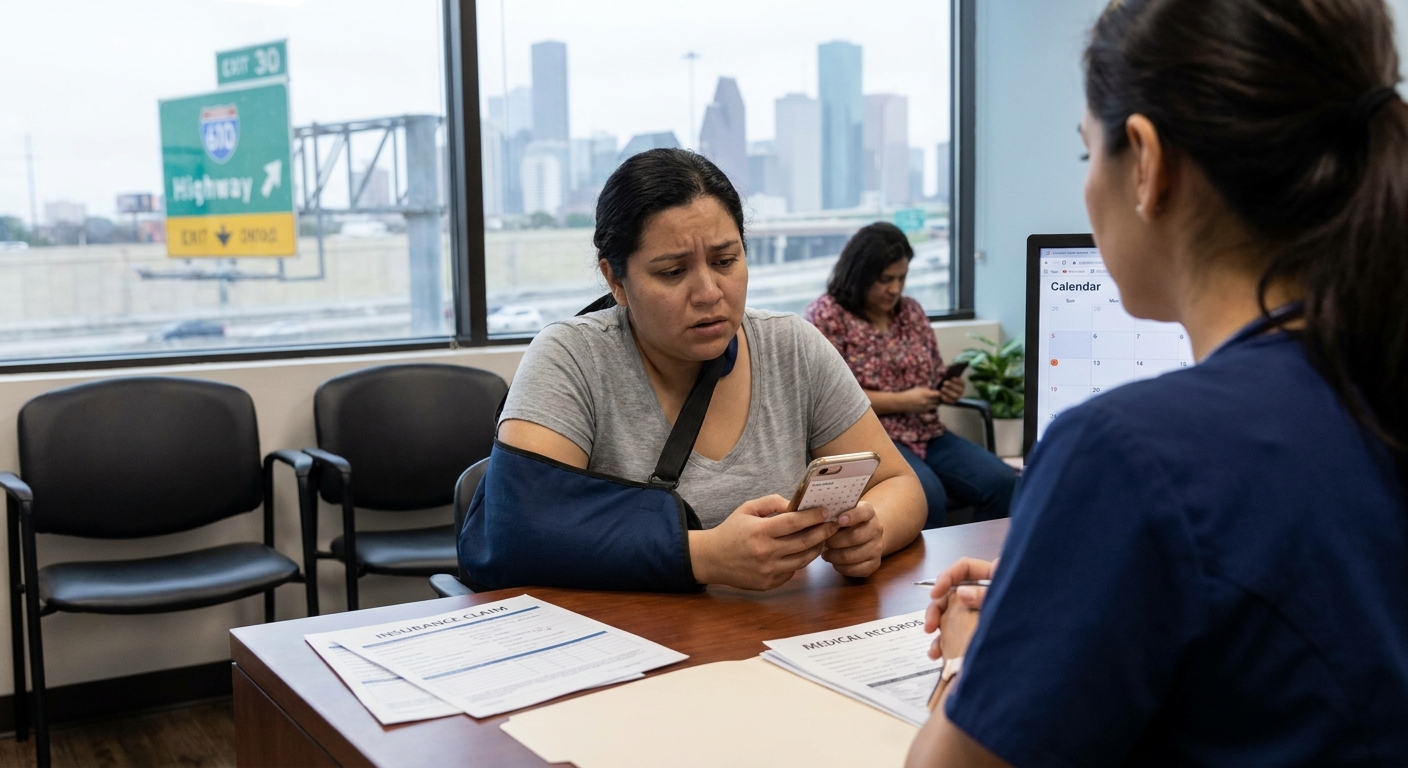
So here's what matters. If you've been hurt — whether it's a wreck on 610, a fall at a store, or something that happened on the job — your next decision shapes everything. Get checked out now. Document the damage. And don't assume the other side will give you the benefit of the doubt, because they won't.
Medical Records Speak Louder Than You Do
You might feel banged up but functional. Maybe the soreness didn't hit until the next morning. Maybe you thought it would go away on its own. That's common — and it's also where claims start to fall apart. Adrenaline masks symptoms. Whiplash doesn't announce itself immediately. Internal injuries can take hours or days to show. But if you wait too long to get examined, the insurance company will use that gap against you.
Medical records create the timeline. They connect your injuries to the incident. They prove severity. And when you delay treatment, you hand the adjuster a reason to question whether the accident caused your condition at all. No records? No proof. No proof? No payout.
Gaps Give Adjusters Ammunition
Insurance companies don't just review your claim — they dissect it. Every delay, every missed appointment, every inconsistency becomes a weapon. When you wait days or weeks to seek care, they'll argue your injuries weren't serious. They'll suggest something else caused the pain. They'll point to pre-existing conditions or activities you did between the accident and your first visit. And they'll use all of it to reduce or deny what you're owed.
Here's what adjusters look for when they spot a delay:
- Any gap longer than 48 hours between the accident and your first medical visit
- Inconsistent statements about when symptoms started or how severe they were
- Missing follow-up appointments or incomplete treatment plans
- Evidence you continued normal activities without seeking care
- Conflicting diagnoses or treatment records from different providers
Texas Law Makes This Worse
Texas operates under modified comparative fault. That means if you're found even partially responsible for worsening your own injuries, your compensation gets reduced. And if the court decides you're more than 50% at fault? You walk away with nothing. Delaying medical care feeds directly into that argument. The defense will claim you failed to mitigate damages. They'll say you made things worse by ignoring symptoms. And in Texas courts, that argument sticks.
We've seen cases where a victim waited five days to visit urgent care after a collision. The insurer cut the settlement offer in half, arguing the delay proved the injuries weren't accident-related. The victim had legitimate soft tissue damage — but the gap in documentation gave the adjuster leverage. That's how it works here. The rules don't forgive delays.
What Gets Documented and What Gets Ignored
Not all medical visits carry the same weight. Emergency room records hold more credibility than a note from a walk-in clinic two weeks later. Diagnostic imaging — X-rays, MRIs, CT scans — backs up your claims in ways that a physician's verbal assessment never will. And consistent follow-through matters. If your doctor recommends physical therapy and you skip half the sessions, the insurance company will use that to question how hurt you really were.
Here's what strong documentation looks like:
- Same-day or next-day visit to an ER, urgent care, or primary physician
- Detailed intake notes linking your complaints to the accident
- Diagnostic tests ordered and completed within the first week
- Referrals to specialists followed up without long gaps
- Treatment plans that you actually stick to, with proof of attendance
When You Should Ignore the Bill and Go Anyway
We get it — medical care in Houston isn't cheap. If you don't have insurance or you're worried about upfront costs, it's tempting to wait. But that calculation costs you more in the long run. Many injury attorneys work with providers who bill on a lien basis, meaning they get paid when your case settles. You don't need cash in hand to get evaluated. You just need to show up.
And if cost is still a barrier, there are options:
- Community health clinics that offer sliding-scale fees
- Urgent care centers that accept payment plans
- Personal injury attorneys who can refer you to providers willing to defer billing
- Emergency rooms, which are required to treat you regardless of ability to pay
- Accident-related claims that may cover initial treatment costs through your own insurance
Follow-Through Is Just as Important as Showing Up
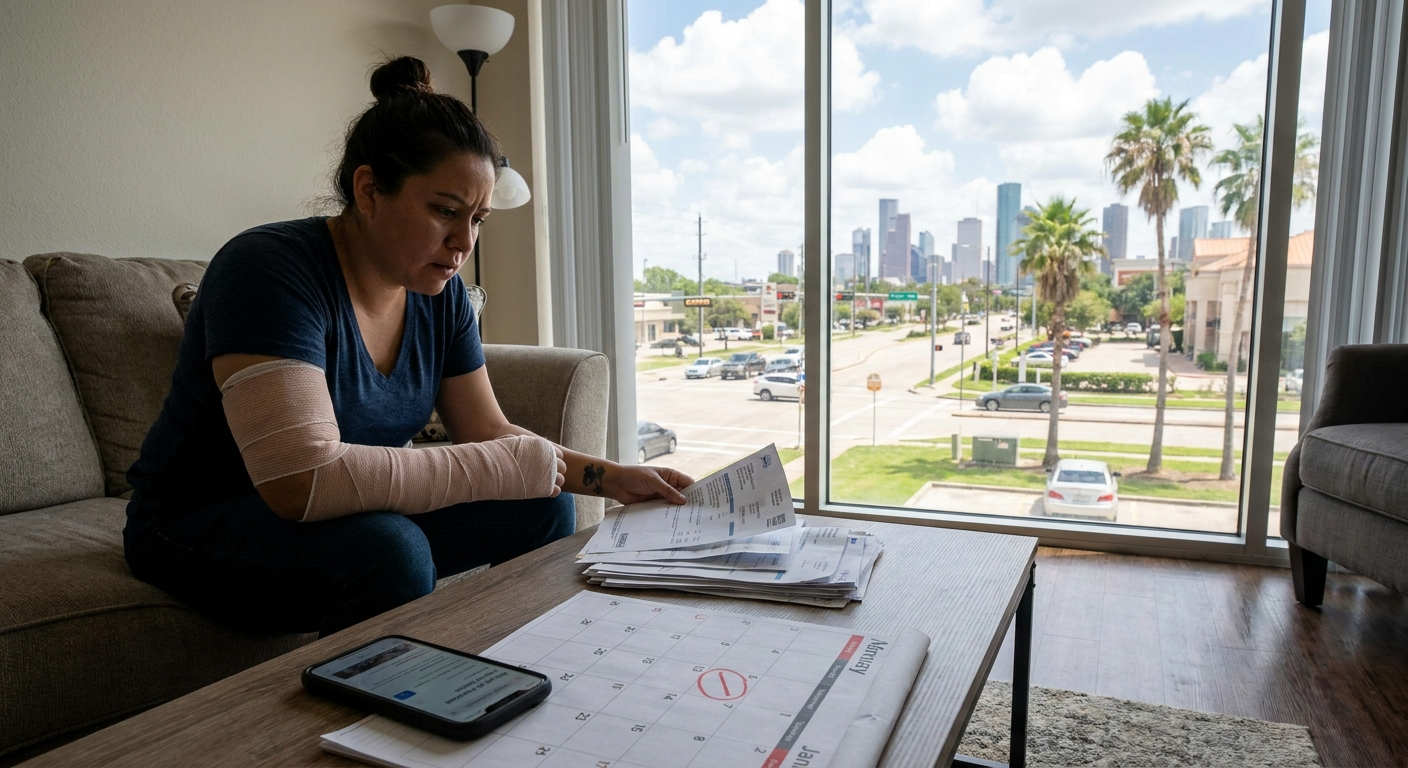
Getting evaluated once isn't enough. If your doctor tells you to come back in a week, do it. If they recommend imaging or physical therapy, schedule it. If they prescribe medication, fill it and take it as directed. Inconsistent follow-through signals to insurers that you weren't really hurt — or that you didn't care enough to heal properly. Either narrative kills your claim.
Adjusters pull complete medical records. They'll notice when you missed appointments. They'll see when you stopped treatment early. And they'll use every gap to argue that your injuries resolved faster than you're claiming, or that you didn't take them seriously in the first place.
Why Waiting Costs More Than You Think
Delaying care doesn't just weaken your legal case — it makes recovery harder. Soft tissue injuries worsen without treatment. Inflammation spreads. Pain becomes chronic. What could have been a few weeks of rehab turns into months of complications. And when you finally do seek care, providers will ask why you waited. That question ends up in your medical records. And once it's there, the insurance company reads it too.
The longer you wait, the more you lose:
- Treatment becomes less effective as injuries worsen or scar tissue forms
- Medical providers may attribute symptoms to something other than the original accident
- Insurance adjusters gain stronger arguments for reducing your settlement
- Your ability to prove causation weakens with every day that passes
- Opposing counsel has more room to argue you contributed to your own suffering
Steps That Keep Your Claim Intact
You don't need to be a legal expert to protect your case. You just need to take care of yourself the right way — and document it. Start with a medical evaluation within 24 hours of the accident, even if you feel okay. Describe every symptom, even minor ones. Follow every recommendation your provider gives you. Keep copies of everything — discharge papers, prescriptions, referral notes, billing statements. And if you're unsure whether something matters, assume it does.
Here's the checklist:
- Visit a doctor or ER within one day of the incident
- Explain that your symptoms are accident-related and provide details
- Follow through on all diagnostic testing and specialist referrals
- Attend every scheduled follow-up and therapy session
- Keep detailed records of every appointment, prescription, and bill
Houston Moves Fast and So Should You
Injury claims don't wait for you to feel ready. Adjusters start building their defense the moment a claim is filed. Evidence fades. Witnesses forget details. And every day you delay treatment gives the other side more room to argue. We work with clients who thought they could handle things on their own — until the insurance company sent a lowball offer or denied the claim outright. By then, the damage was done. The gaps were there. And no amount of explaining could undo what the records already showed.
If you've been hurt, don't gamble with your health or your compensation. Get checked out now. Document everything. And talk to someone who knows how Houston injury claims actually work — before the insurance company writes your story for you. Contact us to protect your rights and your recovery.
Let’s Secure Your Claim Together
We know how overwhelming it can feel after an accident, but you don’t have to navigate this process alone. Let’s make sure your injuries are documented and your rights are protected from day one. If you’re ready to take the next step, call us at 832-519-0054 or schedule an appointment so we can help you move forward with confidence.