


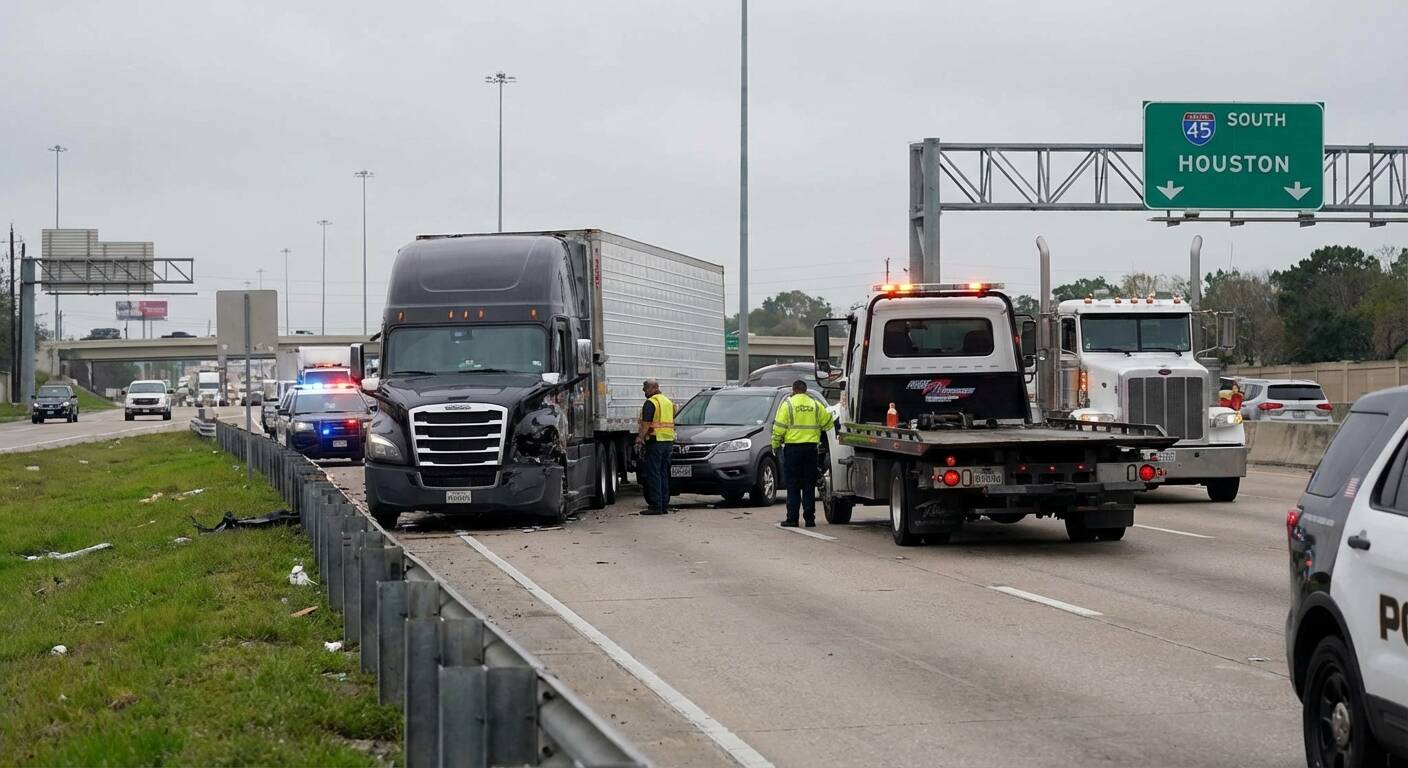
Most people think a semi truck crash ends when the metal stops twisting. It doesn't. The real chaos starts after the dust settles — when insurance adjusters show up with lowball offers, when medical bills pile up faster than answers, and when you realize the trucking company has a legal team on speed dial. Houston's highways see these wrecks daily, and if you don't know what comes next, you're already behind.

So here's what we're laying out. The moments after impact matter just as much as the collision itself. Every decision you make — or don't make — leaves a mark on your case. Every piece of evidence you miss is leverage you hand over. And every assumption about who's responsible could cost you the compensation you're owed.
Get Clear of Traffic and Get Help Fast
The seconds after a semi plows into you aren't the time to assess blame or check your phone. If you can move, get out of the lanes. Houston traffic doesn't slow down for wreckage, and secondary collisions are common. Once you're safe, call 911. Even if you feel fine, adrenaline masks injuries that show up hours or days later — whiplash, internal bleeding, concussions.
Emergency responders will stabilize the scene and get medical personnel on-site. Don't refuse treatment just because you're walking. Some of the worst injuries from truck crashes don't announce themselves right away. Accept the ambulance ride if it's offered. That medical record starts your paper trail, and you'll need it.
Police Reports Carry Weight You Can't Ignore
When officers arrive, they'll document everything — vehicle positions, road conditions, witness statements, visible damage. That report becomes the foundation of your insurance claim and any legal action that follows. Be honest and clear when you speak to them, but don't speculate about fault or apologize for anything. Those statements get recorded, and they can be twisted later.
Ask for the officer's name and badge number. Request a copy of the report as soon as it's available. If the truck driver gets cited, that's evidence. If they don't, that doesn't mean you're out of options — it just means the investigation needs to go deeper.
Capture Everything While It's Still There
If you're physically able, pull out your phone and start documenting. Photograph the trucks, the cars, the skid marks, the debris field. Get wide shots and close-ups. Capture license plates, DOT numbers on the truck, and any visible damage to cargo or equipment. If there are witnesses standing around, get their names and numbers before they leave.
This evidence disappears fast. Trucks get towed, roads get cleared, and witnesses forget details. What you collect in those first minutes could be the difference between a strong case and a weak one. Don't rely on the police to capture everything — they're documenting the scene, not building your claim.
Insurance Calls Come Quick and Loaded
Within hours, you'll get a call from an insurance adjuster. Maybe yours, maybe the trucking company's. They'll sound friendly, concerned, eager to help. Don't fall for it. Their job is to close your claim fast and cheap. They'll ask for a recorded statement, push for a quick settlement, and try to get you to admit fault without realizing it.
Give them the basics — date, time, location — and nothing more. Don't describe your injuries in detail. Don't agree to anything. Don't sign releases. Tell them you're still evaluating your situation and you'll follow up. Insurance companies often engage in tactics that constitute bad faith insurance claims, so protect yourself before you say another word.
Liability Isn't Always Obvious or Simple
Semi truck crashes aren't like fender benders. Responsibility can spread across multiple parties, and figuring out who's liable takes investigation. The driver might have been speeding or drowsy. The trucking company might have ignored federal hours-of-service rules. The maintenance shop might have skipped brake inspections. The cargo loader might have created an imbalance that caused a rollover.
Each of those parties has insurance, and each has lawyers working to shift blame. You need someone digging into logbooks, maintenance records, black box data, and employment files. That's not something you can do from a hospital bed. Experienced 18-wheeler commercial truck accident attorneys know how to investigate these complex cases and establish liability.
Medical Records Build Your Case or Break It
Every doctor visit, every prescription, every therapy session — it all goes in the file. Keep copies of everything. Follow your treatment plan exactly as prescribed. If you skip appointments or ignore recommendations, the defense will use that to argue your injuries aren't serious. If you wait weeks to see a doctor, they'll claim the crash didn't cause the damage.
Document your pain, your limitations, your daily struggles. Take photos of bruises, scars, and medical equipment. Write down how the injuries affect your work, your family, your life. This isn't about exaggerating — it's about creating a clear, honest record that proves what you've been through.
Legal Help Levels the Playing Field
Trucking companies don't mess around. They have attorneys on retainer, investigators on call, and strategies designed to minimize payouts. If you're going up against that alone, you're outgunned. A personal injury lawyer who handles truck crashes knows how to counter those tactics, gather the right evidence, and push back when insurers lowball you.
Texas gives you a limited window to file a claim. Miss that deadline, and your case is dead. An attorney keeps you on track, handles the paperwork, and fights for compensation that actually covers your losses. Most work on contingency, so you don't pay unless you win. Skilled attorneys who specialize in practice areas like truck accidents understand the complexities involved and can navigate the legal system effectively.
Compensation Covers More Than You Think
Medical bills are just the start. You're also entitled to compensation for lost wages, future earning capacity, pain and suffering, property damage, and long-term care costs. If the crash left you disabled or permanently injured, those numbers climb fast. If the trucking company acted recklessly — ignoring safety rules, falsifying logs, pushing drivers past legal limits — punitive damages might be on the table too.
The goal isn't just to cover what you've already lost. It's to account for what's still coming — surgeries, rehab, lost promotions, ongoing pain. In the most tragic cases involving wrongful death, families deserve compensation that reflects the full magnitude of their loss. A good attorney calculates the full impact and fights for every dollar you're owed.
What You Do Now Shapes What Comes Next
Recovering from a semi truck crash in Houston isn't just about healing physically. It's about protecting your rights, building a strong case, and making sure the people responsible don't walk away clean. The trucking industry has deep pockets and aggressive legal teams. You need to be just as prepared.
Don't wait for the insurance company to do the right thing. Don't assume the system will work in your favor. Get medical care, gather evidence, and bring in a lawyer who knows how these cases play out. The decisions you make in the days after the crash will determine whether you get the compensation you deserve or get left holding the bill.
Let’s Take the Next Step Together
We know how overwhelming life can feel after a semi truck crash, but you don’t have to face the aftermath alone. Let’s work together to protect your rights, hold the trucking company accountable, and fight for the compensation you deserve. If you’re ready to talk, call us at 832-519-0054 or schedule an appointment so we can start building your case today.

.png)